
Aluminum catamaran yards now finish a complete 70-meter hull in under three weeks and offshore wind factories weld transition pieces around the clock. In this world, the MIG gun never rests, and the wire feeder never forgives. A single hesitation from a badly designed spool stops robots, kills bonuses, and pushes launch dates. Aluminum Mig Wire Manufacturers who still ship random-wound cardboard reels create chaos, while those who treat every spool like precision tooling keep production flowing hour after hour.
Random winding looks innocent on the shelf, but the moment the wire pays off, trouble begins. Loops leave the spool at different diameters. Large loops slap the conduit walls, small loops snag on the previous layer. The soft aluminum kinks instantly, forming the dreaded bird-nest that locks the feeder solid. Robots on ferry deck panels halt twenty meters into a seam, red lights flashing, while welders crawl underneath with pliers.
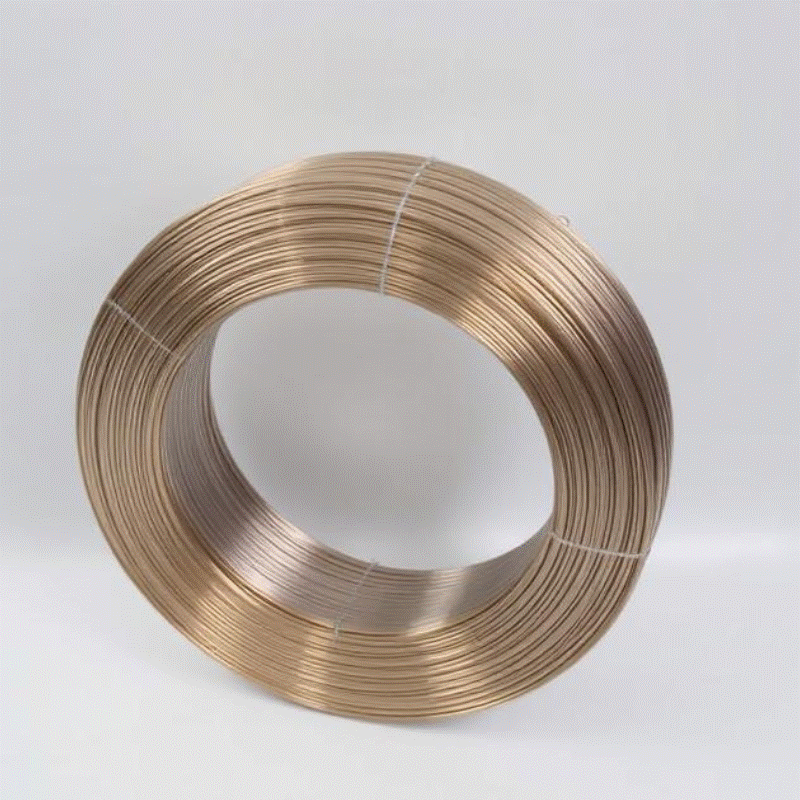
Precision layer winding solves the problem before it starts. Each turn sits exactly beside the last, row after perfect row, from outer flange to center core. Cast stays identical from the first centimeter to the final gram. The wire slides off the spool like ribbon from a gift, never jumping, never diving under previous layers, never giving the drive rolls a reason to slip.
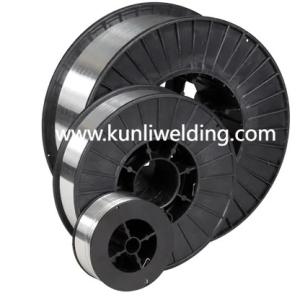
Plastic reels beat cardboard in every environment. Coastal yards see cardboard cores absorb humidity and swell overnight. The layers tighten, payoff tension triples, and the wire drags. The arc shortens, penetration drops, and lack-of-fusion hides until radiography. Solid plastic reels with machined hubs stay dimensionally stable whether stored on a humid quay or a freezing platform deck.
Weight capacity decides shift length. Baskets run dry halfway through a long hull side and force an emergency spool change that breaks robot rhythm. Precision plastic reels let a single spool finish multiple blocks. The larger diameter also reduces curvature memory in the wire, helping it lie straight in the liner and reducing burn-back.
Flange design matters more than most realize. Cheap pressed-metal side plates have sharp edges that shave aluminum particles into the conduit. Those particles build up and clog contact tips. Smooth, radiused plastic flanges guide the wire gently and leave the liner clean. Tips last entire shifts instead of entire seams.
Balance at high speed separates the professionals from the amateurs. Random-wound spools often have heavy spots that wobble as they spin. The vibration travels twenty meters down the conduit and makes the torch dance. Seam-tracking sensors lose the joint and the robot faults out. Perfectly balanced layer-wound reels spin silently at maximum wire-feed speed, letting lasers stay locked and beads stay straight.
Center hub geometry affects grip. Some feeders prefer tapered hubs that center automatically. Others need straight hubs with locking collars. Manufacturers who offer both let yards standardize on one wire brand across mixed equipment fleets. The spool drops in, locks once, and feeds perfectly regardless of which feeder it meets.
Surface finish on the reel itself prevents debris. Rough injection-molded plastic creates microscopic ridges that scrape the wire. Polished reel surfaces let aluminum glide without shedding particles that later clog tips or create porosity.
Storage life reveals the final advantage. Cardboard reels left outside collapse under rain. Plastic reels with sealed factory wrap survive months on open pallets. Yards building multiple vessels keep reserve stock without fear of swollen cores or rusted flanges.
Welders feel the difference immediately. The gun stays light in the hand, the arc sounds steady, and the puddle stays exactly where they point it. Robots finish entire hull blocks without a single alarm. Production managers see overtime disappear and launch photographs arrive on schedule.
Aluminum Mig Wire Manufacturers who engineer spools like precision components also engineer the wire inside them. The same care that produces perfect payoff usually means round wire, clean surface, and consistent diameter. Customers learn quickly that a spool built right almost always contains wire ready for the fastest production lines.
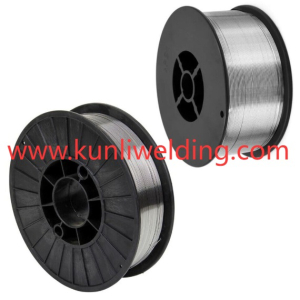
Every ER5183 listing shows the actual precision plastic spool, layer-wound pattern, balanced hubs, and smooth flanges used on current high-speed ferry and offshore projects. When the next robot cell demands aluminum MIG wire that feeds so smoothly the operator forgets the spool is even there, the close-up photographs and feeding videos waiting at www.kunliwelding.com prove why some Aluminum Mig Wire Manufacturers never give the feeder an excuse to stop the torch.