
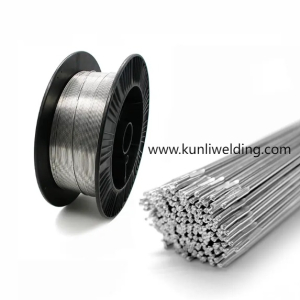
Structural applications operating in demanding environments require materials capable of withstanding sustained stress, corrosion exposure, and dynamic loading throughout extended service lives. Engineers specifying welded assemblies for these challenging situations evaluate filler metals based on multiple performance criteria rather than single properties. Aluminum Welding Wire ER5087 frequently appears in specifications for marine equipment, transportation components, and other structures where reliability cannot be compromised. Understanding the characteristics that make this particular formulation suitable for severe duty applications helps explain its widespread adoption across industries.
Corrosion resistance stands as a fundamental requirement for structures exposed to salt water, industrial atmospheres, and weather extremes. Aluminum alloys vary considerably in their ability to resist environmental attack, with composition determining susceptibility to different corrosion mechanisms. Magnesium content within filler metals influences both mechanical properties and corrosion behavior. The specific chemistry of certain wire formulations provides enhanced resistance to stress corrosion cracking and general atmospheric degradation. These protective qualities become critical when components face continuous exposure to corrosive elements without opportunity for protective maintenance.
Strength requirements in transportation and marine structures demand weld metals capable of matching or exceeding base material properties. Joints must carry loads without becoming weak points that limit overall structural capacity. Tensile and yield strength values in completed welds depend heavily on filler metal composition and heat treatment condition. Certain aluminum alloy systems develop strength through work hardening and cannot be heat treated after fabrication. Filler selections for these applications must provide adequate as welded properties without relying on post weld thermal processing.
Ductility preservation alongside strength development creates balanced mechanical performance essential in impact prone applications. Rail cars experience repeated loading cycles and occasional shock loads that brittle materials cannot tolerate. Marine fittings face wave impact and mooring stresses requiring energy absorption capacity. Welds lacking adequate elongation capability crack under these service conditions despite meeting static strength specifications. Filler chemistries that maintain ductility while developing useful strength levels enable structures to survive dynamic loading throughout their operational lives.
Crack resistance during welding prevents defects that compromise structural integrity from the moment of fabrication. Hot cracking in the solidifying weld pool and cold cracking in heat affected zones represent persistent challenges in aluminum fabrication. Different filler compositions exhibit varying susceptibility to these defect mechanisms based on their solidification characteristics and thermal contraction behavior. Formulations engineered for crack resistance allow fabricators to produce sound joints without extreme parameter control or extensive post weld inspection.
Weldability across diverse base metal combinations expands application versatility. Marine structures often incorporate multiple alloy types within single assemblies, requiring filler metals compatible with dissimilar metal joints. Transportation equipment similarly combines different aluminum grades optimized for specific structural roles. Filler selections with broad base metal compatibility simplify fabrication by reducing the variety of consumables needed in inventory. This versatility proves particularly valuable in repair situations where exact base metal identification may be uncertain.
Fatigue performance determines structural life in components experiencing cyclic loading. Rail car underframes and marine hull structures accumulate millions of load cycles during service. Welds must resist fatigue crack initiation and propagation to achieve design life expectations. Certain filler metal microstructures provide improved fatigue resistance compared to alternatives. The combination of strength, ductility, and clean metallurgical structure contributes to enhanced fatigue durability.
Temperature stability maintains mechanical properties across operating ranges encountered in service. Equipment operates in environments ranging from subfreezing winter conditions to elevated temperatures from solar heating or proximity to engines. Some aluminum alloys lose strength rapidly as temperature increases while others maintain properties better. Filler selections for multi season operation require adequate strength retention across anticipated temperature extremes.
Anodizing compatibility matters in marine applications where corrosion protection coatings enhance durability. Architectural and decorative anodizing produces oxide layers that resist corrosion while providing aesthetic appearance. Weld metal must respond to anodizing treatments similarly to base metal to achieve uniform protective coatings. Certain filler chemistries match base metal anodizing behavior better than others, producing more consistent corrosion protection across welded assemblies.
Toughness at low temperatures becomes important for structures operating in cold climates or refrigerated service. Some aluminum alloys become brittle as temperature drops, exhibiting reduced impact resistance and increased fracture susceptibility. Transportation equipment serving northern regions requires materials that maintain toughness throughout winter conditions. Filler metals retaining adequate notch toughness at reduced temperatures prevent brittle fracture failures during cold weather operation.
Porosity resistance ensures internal weld quality despite challenging field conditions. Marine fabrication often occurs in shipyards with less controlled environments than manufacturing facilities. Moisture contamination and inadequate shielding create conditions favorable to gas porosity formation. Certain filler chemistries demonstrate improved resistance to porosity through better degassing characteristics during solidification. This robustness reduces rejection rates and rework requirements in production welding.
Repair welding capabilities extend structure service life through restoration of damaged components. Marine vessels and rail equipment undergo periodic repair to address wear, corrosion, and mechanical damage. Filler metals that produce sound welds on aged, corroded, or previously welded base materials enable economical repairs. The ability to make quality repairs using standard procedures without extensive surface preparation supports fleet maintenance operations. For fabricators requiring reliable filler metals proven in demanding structural applications, comprehensive technical information and quality products are available at https://kunliwelding.psce.pw/8hphzd .