
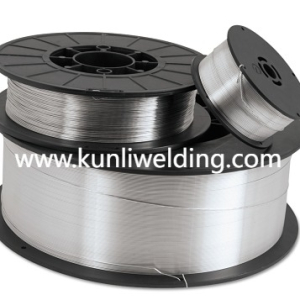
Production welding environments prioritize efficiency alongside quality, with manufacturers constantly seeking materials and processes that accelerate fabrication without compromising structural integrity. High-volume operations demand filler materials supporting rapid travel speeds while maintaining consistent arc characteristics and producing sound welds across varied conditions. The specific metallurgical and operational characteristics of Aluminum Welding Wire ER5087 make it particularly suitable for high-speed welding applications where productivity gains directly impact manufacturing economics and competitive positioning in industries ranging from transportation equipment to structural fabrication.
Arc stability at elevated welding speeds represents a critical advantage for production environments. As travel speed increases, maintaining consistent arc behavior becomes challenging with some filler materials exhibiting erratic performance or requiring constant parameter adjustment. This magnesium-bearing alloy delivers predictable arc characteristics across broader speed ranges compared to alternatives showing instability when operators or automated systems push production rates. The stable arc reduces spatter generation while maintaining steady metal transfer into the weld pool. Robotic welding systems particularly benefit from this arc stability, as automated processes cannot compensate for marginal material performance the way skilled manual welders adapt through technique adjustments.
Weld pool fluidity at high deposition rates affects fusion quality and bead appearance when welding rapidly. Materials with poor flow characteristics create irregular bead profiles or incomplete fusion when travel speeds exceed their fluid response capabilities. The wetting behavior of this alloy promotes smooth flow patterns even at elevated speeds, producing consistent bead geometry without excessive reinforcement or irregular edges requiring post-weld finishing. This flow performance supports visual quality alongside structural soundness, particularly valuable in applications where weld appearance receives scrutiny during inspection or remains visible in finished assemblies.
Reduced porosity susceptibility under fast welding conditions protects quality when production pressures drive aggressive parameters. Rapid welding creates challenging conditions for gas shielding and contaminant escape from solidifying weld pools. Some filler materials exhibit increased porosity tendencies at high speeds as insufficient time allows trapped gases to escape before solidification. This magnesium-bearing formulation demonstrates better porosity resistance across speed ranges, maintaining internal soundness even when welding parameters push productivity boundaries. Radiographic inspection and destructive testing verify this porosity resistance, providing confidence that accelerated welding maintains quality standards required for structural applications.
Heat input management benefits from efficient weld pool formation that achieves adequate penetration without excessive energy. High-speed welding naturally reduces heat input per unit length compared to slower travel at equivalent current settings. Materials requiring aggressive heat input to achieve fusion become problematic when speed increases reduce available heating time. Aluminum Welding Wire ER5087 achieves necessary fusion with moderate heat input levels, enabling speed increases without requiring proportional current increases that would cause burn-through or excessive distortion. This thermal efficiency proves particularly valuable in thin gauge material applications where heat control critically affects dimensional stability and warping prevention.
Consistent wire feeding characteristics support reliable high-speed operation whether welding manually or with automated equipment. Feeding problems create immediate quality issues in production welding, with interruptions causing defects and downtime. Wire surface quality, dimensional consistency, and mechanical properties all influence feeding reliability at elevated speeds. This alloy's manufacturing typically maintains tight tolerances and surface conditions supporting smooth feeding through drive mechanisms and contact tips. The reduced feeding friction and consistent wire diameter prevent common high-speed feeding issues like bird nesting, erratic wire delivery, or variable stick-out distances affecting arc characteristics.
Operator fatigue considerations enter production welding scenarios where welders perform repetitive tasks across full shifts. Materials exhibiting forgiving behavior across parameter ranges reduce mental workload required for maintaining quality at high speeds. This filler's tolerance for modest parameter variations within acceptable ranges prevents operators from constantly adjusting equipment or technique to maintain acceptable results. The reduced concentration demands help sustain quality consistency throughout production shifts when fatigue might otherwise degrade performance with less forgiving materials requiring precise control for acceptable outcomes.
Mechanical property consistency across varied welding speeds ensures joints meet strength requirements regardless of production rate fluctuations. Some filler materials exhibit property variations when heat input changes significantly with speed adjustments. Engineering specifications typically require minimum mechanical properties regardless of welding parameters within qualified ranges. This alloy maintains acceptable mechanical characteristics across speed variations within reasonable production ranges, providing confidence that accelerated welding does not compromise structural performance. Procedure qualification testing verifies property consistency across anticipated speed ranges, documenting that production flexibility does not sacrifice joint integrity.
Multi-pass welding efficiency benefits from materials supporting rapid deposition in fill and cap passes where productivity gains accumulate significantly. While root passes often proceed at controlled speeds for penetration control, subsequent passes can leverage high-speed capabilities to accelerate overall joint completion. The ability to increase speeds in fill passes without quality degradation reduces cycle times in thick section welding where multiple passes dominate total welding time. This selective speed increase strategy balances root pass control against fill pass productivity for overall efficiency optimization.
Aluminum Welding Wire ER5087 demonstrates particular suitability for production environments where throughput directly affects manufacturing economics. Shipbuilding operations, railcar fabrication, structural steel equivalents in aluminum, and high-volume manufacturing all benefit from materials supporting aggressive production parameters. The combination of arc stability, fluidity, porosity resistance, and feeding reliability creates operational advantages translating to measurable productivity improvements when welding parameters can safely push toward higher speed ranges without quality compromises.
Cost analysis for high-speed welding considers labor savings alongside material pricing. While specialized filler materials may carry premium costs compared to general-purpose alternatives, labor represents the dominant cost component in most welding operations. Materials enabling significant speed increases reduce labor hours per completed weldment, potentially offsetting higher material costs through improved labor productivity. Calculating total welding costs rather than just material expenses reveals economic advantages that pure material price comparisons miss. High-volume operations where labor costs multiply across numerous identical assemblies see particularly attractive returns from materials supporting accelerated production.
Process development and qualification establish safe speed limits for specific applications and joint configurations. Not all applications tolerate maximum speed capabilities, as joint access, position requirements, and fit-up variations affect practical production speeds regardless of material capabilities. Procedure qualification identifies acceptable speed ranges producing required mechanical properties and weld soundness for specific applications. These qualified procedures document that high-speed welding maintains quality standards rather than creating hidden defects through excessive production pressure. Operators receive training on qualified parameters ensuring production speed increases occur within approved limits rather than through unauthorized parameter deviations.
The advantages of this magnesium-bearing alloy for high-speed aluminum welding stem from balanced performance across multiple operational characteristics rather than single exceptional properties. Production environments benefit from materials delivering consistent results across parameter ranges while tolerating the variations inherent in high-volume manufacturing where perfect consistency proves elusive despite best efforts. Technical information supporting high-speed welding applications is available at https://www.kunliwelding.com/ .