


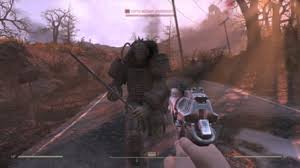
Fallout 76 takes the familiar post-nuclear universe and reshapes it into a shared survival journey set in the wild landscapes of Appalachia. Emerging from Vault 76 as one of the first dwellers tasked with reclaiming the land, players step into a world that is both hauntingly beautiful and brutally unforgiving. Over time, Fallout 76 has grown into a layered experience centered on exploration, rebuilding, and cooperation.
Appalachia stands apart from previous wastelands in the series. Rolling hills, dense forests, and decaying small towns replace the typical desert ruins. Despite the devastation, nature has reclaimed much of the environment, creating a striking contrast between vibrant greenery and rusted remnants of civilization. Exploration is a core pillar of the game. Every abandoned building, research facility, or roadside attraction tells a story through environmental detail, terminals, and scattered notes. The world rewards curiosity, encouraging players to venture off the beaten path.
Survival mechanics add tension to daily life in Fallout 76. Players must manage health, radiation, and resources while defending themselves against mutated wildlife and hostile factions. Crafting plays a central role, allowing scavenged materials to be transformed into weapons, armor, and consumables. This system ties directly into the game’s theme of rebuilding. Nothing is wasted; everything can be repurposed to aid survival.
A standout feature is the C.A.M.P. system, which allows players to establish customizable bases almost anywhere on the map. These camps serve as crafting hubs, safe havens, and even trading posts. Some players design elaborate multi-level structures, while others build compact, functional shelters. The C.A.M.P. mechanic strengthens the sense of ownership within the world, turning survival into an act of creativity.
Multiplayer interaction defines Fallout 76’s identity. Although it can be played solo, the experience becomes richer when players collaborate. Public events bring strangers together to defend locations, eliminate powerful enemies, or complete large-scale objectives. Cooperation often determines success in high-level challenges, fostering a sense of shared accomplishment. The evolving community aspect sets Fallout 76 apart from earlier single-player entries in the franchise.
Character progression uses the familiar S.P.E.C.I.A.L. attribute system, enhanced by a flexible perk card mechanic. This allows players to adjust builds over time, experimenting with heavy weapons, stealth tactics, crafting efficiency, or support roles. Adaptability ensures that the game remains engaging even after dozens of hours.
Major updates introduced human NPCs and expanded questlines, enriching the narrative depth. Dialogue choices and faction interactions now play a stronger role, adding layers of consequence and immersion. Seasonal content continues to reshape the landscape, keeping the world dynamic.
Fallout 76 Items ultimately reflects resilience. It tells a story not just of survival after catastrophe, but of rebuilding community in its aftermath. Through exploration, construction, and cooperation, players transform a devastated land into something hopeful. In doing so, the game demonstrates that even in a shattered world, determination and creativity can spark renewal.